
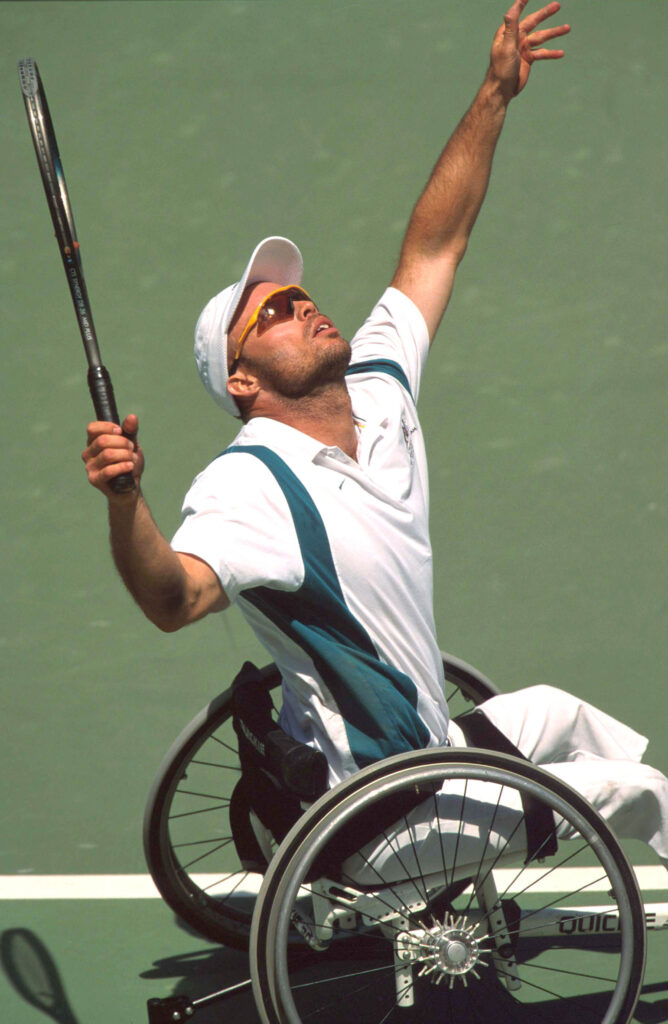
How to Serve in Tennis
The serve is the only shot in tennis that begins completely on your terms. Nobody is rushing you, nobody is hitting the ball at your feet, and nobody can force your timing. That is why beginners often assume it should be the easiest stroke to learn. In reality it becomes the most frustrating shot for many players, because it asks for coordination rather than brute effort. A clean serve does not come from throwing your arm at the ball. It comes from building a sequence that starts from the ground, moves through the body, and ends with a relaxed but fast contact point.
If you want to serve better, the first mental shift is to stop treating the motion as one big swing. Good servers build a chain: stance, toss, coil, upward drive, contact, and finish. When one link is shaky, the whole motion feels unreliable. The goal is not to force power into the motion. The goal is to build a repeatable action that can be trusted under pressure.
Start With a Stance That Lets You Move Up Through the Ball
Your stance should feel balanced rather than dramatic. Most right-handed players begin with the left foot angled toward the right net post and the back foot roughly parallel to the baseline, though exact positions vary between platform and pinpoint styles. What matters is that you feel stable enough to toss without drifting and loaded enough to push upward once the motion begins. If the stance feels twisted or stiff, the serve often turns into an arm-only action before the ball is even in the air.
The Toss Decides More Than Most Players Admit
A poor toss ruins good mechanics because it forces last-second improvisation. Players blame their wrist, shoulder, or technique when the real issue is that the ball is too far behind them, too far to the left, or too low to strike cleanly. The toss should rise from a calm arm, not a flick. Think of placing the ball rather than throwing it. For a basic serve, you want the toss slightly in front of you and high enough that you can extend fully without hurrying. If the toss is consistent, the rest of the motion becomes simpler almost immediately.
This is why coaches often spend surprising amounts of time on tossing drills. The toss is not a minor prelude to the serve. It is the serve’s steering wheel. A player with an average arm and a reliable toss can build a dependable service game. A player with natural power and a wild toss usually lives between double faults and desperate adjustments. Before changing anything dramatic in your motion, make sure the ball is actually going to a place where a good swing is possible.
Use the Body to Create Upward Force
One of the biggest beginner mistakes is trying to hit down on the serve as if it were an overhead smash. The ball starts above your head, but the force of the serve is created by driving up to it. Your knees bend slightly, your hips and shoulders coil, and then the body extends upward so the racket can accelerate through contact. Even flatter first serves still come from that rising action. If you stay upright and simply slap at the ball, the serve may go in now and then, but it will rarely have enough pace, spin, or margin to hold up.
Think of the serve as a throwing motion aimed into the court. The legs help launch the body, the trunk helps rotate it, and the shoulder and arm transmit the speed. Good servers look smooth not because they are doing less, but because all those parts are connected. When the lower body and upper body are synchronized, the racket feels heavy through the ball without the player feeling tense. That sensation is more useful than chasing a picture-perfect motion.
Contact Should Feel High, Loose, and Fully Extended
The most reliable contact point is usually at full reach, slightly in front of the body, with the hitting arm extended and the non-hitting arm no longer pulling the body off line. If contact happens too low, the serve loses shape and players start muscling it. If contact is too far above or behind the head, the shoulder can jam and the serve becomes hard to control. You do not need to freeze at contact like a photograph, but you do need to arrive there from a position of balance.
Relaxation matters here. Players often grip too tightly because they want control, then wonder why the racket head feels slow. A serve needs snap and acceleration, not stiffness. That does not mean the wrist should be floppy or consciously flicked. It means the entire arm should stay loose enough for the racket to travel quickly. The sensation is closer to throwing than pushing. If the motion feels forced, tension is probably getting to the ball before speed does.
Spin Makes the Serve Safer and More Useful
Many recreational players chase a flat serve because it looks powerful, but spin is what makes a serve trustworthy. A slice serve curves away from the returner and can open the court. A topspin or kick serve jumps higher and gives you more margin over the net. Even a basic first serve becomes easier once you stop aiming for a straight laser and start allowing the ball to rotate. Spin gives the ball shape. Shape gives you control.
This matters even if you are not trying to build an advanced serving arsenal yet. A player who can hit a moderate slice serve to the backhand on big points is in a better tactical position than a player who swings for flat aces and misses half of them. Reliability is not boring. In tennis, it is a weapon.
The Most Common Errors Usually Have Simple Causes
If the serve keeps flying long, the contact may be too flat, the toss may be too far forward, or the body may be falling open too early. If the serve keeps hitting the net, the toss may be dropping too low, the legs may not be driving upward, or the swing path may be too cautious. If the serve feels powerful in practice but disappears in matches, the problem is often tension rather than mechanics. Match nerves tighten the hand and speed up the mind, which is enough to break the motion apart.
Double faults deserve a calm diagnosis. They do not always mean the second serve is technically broken. Sometimes the player never learned a second-serve identity at all. If your first and second serves are basically the same swing with different fear levels attached to them, pressure will expose that quickly. A real second serve should have its own intention, usually more spin, more shape, and more trust. It is a shot designed to begin the rally without donating the point.
Practice the Serve With Purpose, Not Just Volume
Serving a bucket of balls without feedback can groove bad habits as easily as good ones. Better practice comes from isolating parts of the motion and then reconnecting them. Spend time tossing without hitting. Hit serves at seventy percent pace while focusing only on balance and extension. Aim for specific targets rather than just trying to clear the net. Alternate first and second serves so the practice reflects match reality. If every practice ball is a fearless first serve, the training is incomplete.
A Good Serve Is a Reliable Beginning, Not a Circus Trick
The best way to learn how to serve in tennis is to simplify the goal. You are not trying to imitate every flourish of elite professionals or produce instant free points. You are trying to send the ball into the box with shape, purpose, and enough quality that the rally begins on favorable terms. That means building from balance, repeating the toss, driving upward, contacting the ball at full reach, and choosing control before ego.
Once those pieces settle, the serve becomes much less mysterious. Power arrives more naturally, spin becomes easier to trust, and pressure stops feeling like an attack on your weakest stroke. A solid serve is a coordinated habit. Build that habit patiently, and the shot that once felt like a separate sport starts to feel like the most dependable part of your game.
📚 From the Blog


Image credit: Sport the library / Wikimedia Commons (CC BY-SA 3.0)