
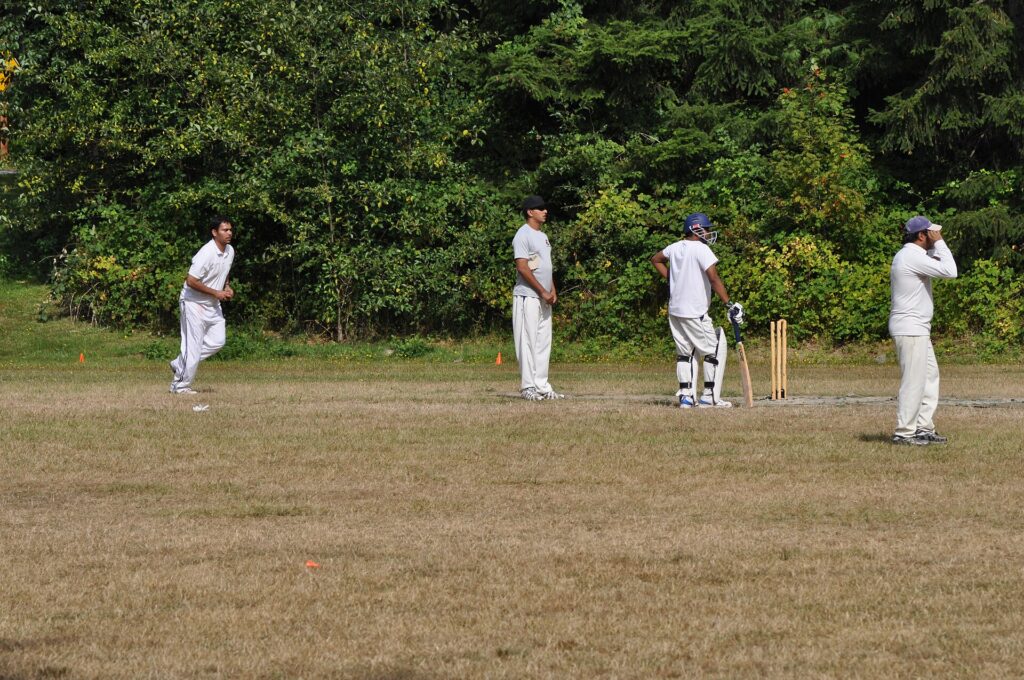
How to Bowl an Off-Spin Delivery
Off-spin is one of cricket’s most deceptive arts because the delivery often looks gentle until it starts causing doubt. The bowler is not trying to blast the batter with speed. The threat comes from drift, dip, turn, and the constant suggestion that the next ball may behave slightly differently from the last one. To bowl effective off-spin, you need more than a grip and a hopeful flick. You need control of the seam, the fingers, the release, and the patience to build a dismissal rather than chase one every ball.
The Grip Creates the Personality of the Ball
An off-spinner usually holds the ball with the seam running roughly across the fingers, with the index and middle fingers playing the leading role and the thumb offering light support underneath. The exact feel differs from bowler to bowler, but the key is that the fingers, especially the index finger, must stay in command of the release. If the ball is buried too deep in the palm, it becomes difficult to impart spin. If it is balanced too loosely, the bowler loses control and the seam wobbles out.
The best grip is one that allows you to feel the ball rolling off the fingers rather than being pushed from the hand. That difference is crucial. Off-spin is created by rotation, not by shoving the ball toward the pitch. Young bowlers often try too hard to spin it and end up snatching at release. The result is a dragged length, a full toss, or a ball so wide that the batter can ignore it. A good grip should feel secure but alive, giving the fingers room to work.
Release Matters More Than Big Turn in Practice
Many developing spinners judge a ball only by how sharply it turns. That can be misleading. In real matches, a reliable off-spinner wins more often with repeatable shape and accurate length than with one spectacular ball every over. The release should be smooth enough that the seam rotates cleanly and the wrist stays stable. The fingers do the spinning, while the hand guides the line. If the wrist collapses or the elbow drifts, the bowler may still get occasional turn, but not the kind of control needed to attack a batter over six balls.
Think of the stock off-break as a delivery you can land on demand. It should pitch in an area that asks a question. Too short and the batter rocks back comfortably. Too full and the batter smothers the spin or drives cleanly. The useful length is often just short of a full drive, where the batter has to commit without complete certainty. That is where off-spin starts to work on the mind rather than just the surface.
Flight Is Not Decoration
One mistake newer bowlers make is assuming flight simply means throwing the ball higher in the air. Good flight is subtler than that. It is about using trajectory to make the batter misread where the ball will arrive. A well-flighted off-break seems inviting for a moment, then dips a touch more than expected and lands in a spot that forces a rushed adjustment. That slight change can bring mistimed drives, leading edges, or bat-pad chances close to the wicket.
Bowling flatter can be useful, especially in limited-overs cricket when the batter is lining up big swings, but a spinner who never changes the loop becomes predictable. Flight gives the delivery personality. It makes the batter decide whether to come forward, stay back, or attack from the crease. Once the batter has to guess, the spinner has already started winning small pieces of the contest.
Line and Length Build Pressure Before Wickets Arrive
The romantic image of spin bowling is the ball ripping square and hitting the top of off. In reality, good off-spin often begins with boredom from the batter’s point of view. The same channel keeps appearing. The same decision has to be made again and again. Defenders stay in place. Singles dry up. The batter starts to search for release. Only then does the bowler’s variation become especially dangerous.
The Body Action Should Support Control, Not Fight It
An off-spinner does not need a dramatic run-up. The approach should be rhythmic and compact enough to keep the body balanced at the crease. The front side helps aim the ball, the shoulders rotate through naturally, and the bowler finishes in a position that could field the next shot. If the action is falling away to leg side or collapsing after release, line control usually suffers. Spin bowling should look easy, but that ease comes from efficient movement.
Balance also affects disguise. When the stock ball and the variations come from the same action, the batter has less information. If the bowler changes shape every time he tries to bowl a quicker one or a straighter one, the batter reads it too early. A stable action protects surprise, and surprise is one of the spinner’s most valuable tools.
Variation Works Only When the Stock Ball Is Trusted
Off-spinners often talk about the arm ball, the quicker ball, or subtle changes of pace and seam. Those variations matter, but they are useful only when the batter respects the basic off-break. If the stock delivery is not threatening line, length, or turn, the extras feel like decoration. The arm ball is effective because the batter expects spin and gets a ball that holds its line. The quicker ball works because the batter has been conditioned to a certain pace and release point. Variation is a conversation with expectation.
This is why experienced captains love spinners who do not panic. They understand that the setup can take time. A batter who has defended three turning balls may plant the front foot too early on the fourth. A batter worried about the ball that comes back in may play inside the line of the one that goes straight. Off-spin is often strategic rather than explosive. The wicket can begin two overs before it arrives.
Field Placements Are Part of the Method
Off-spin is tied closely to field setting because the bowler is trying to guide the batter toward certain risks. A slip or leg slip can reward edges. A short midwicket or silly point can come into play when bat and pad are close together. Mid-off and extra cover may tempt the drive while also punishing it. Even when the batter does not hit to those fielders, their presence shapes the shot selection. They make some options feel safer and others feel crowded.
How to Practice Without Teaching Yourself Loose Habits
Practice should begin with length and seam rather than fancy variation. Place a target on the pitch and bowl repeated overs trying to land the stock ball in that zone with the seam spinning strongly. Judge success by shape and control, not by whether one ball turns wildly. It also helps to practice to both right- and left-handed angles, because the line that threatens one batter may feed the strengths of the other.
Off-Spin Is a Craft of Repetition and Subtlety
To bowl an off-spin delivery well, you need a controllable grip, a finger-led release, a dependable length, and the patience to let pressure do part of the work. The batter should feel that every ball asks a question, even when the answer is only a forward defensive shot. Once that pressure builds, the spin, drift, and variations become much more powerful.
That is the real appeal of off-spin. It is not about theatrical turn for its own sake. It is about making the batter uncertain one decision at a time. A good off-spinner controls the tempo of that uncertainty, keeps repeating the threat, and then changes just enough at the right moment to draw the mistake. Learn that rhythm, and the delivery stops being a trick. It becomes a method.
📚 From the Blog



Image credit: Joe Mabel / Wikimedia Commons (CC BY-SA 3.0)