
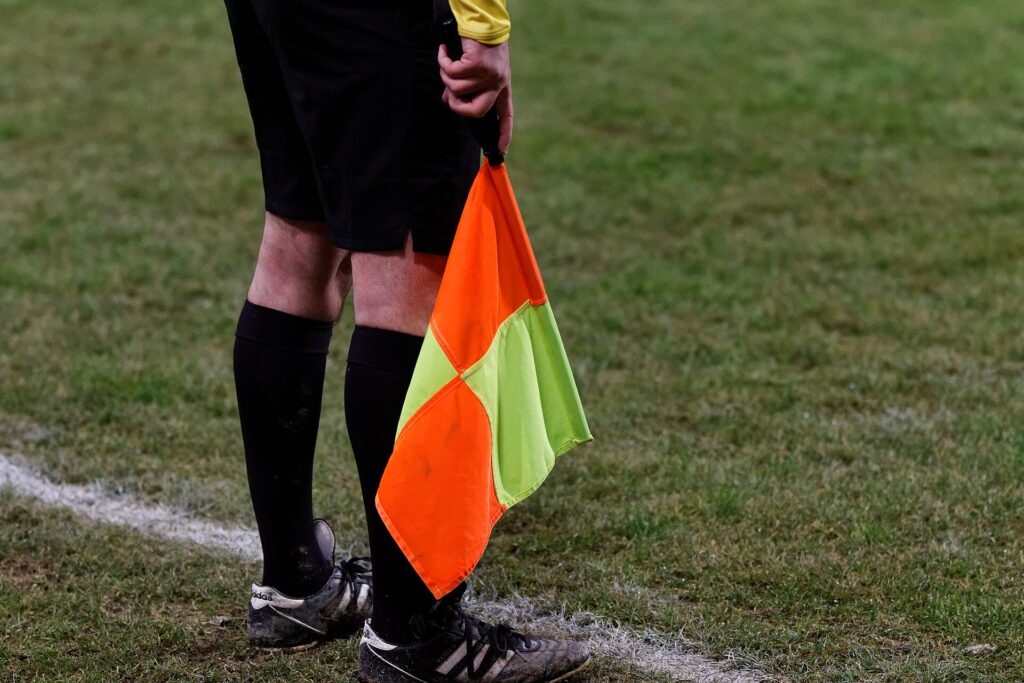
What Does Offside Mean in Football?
Offside is the law that creates more arguments than almost any other moment in football because it punishes something that can look harmless at full speed. A striker makes a clever run, the pass arrives, the finish is clean, the crowd reacts, and then the flag goes up. To people who do not watch football often, it can feel random. To people who watch every week, it can still feel cruel. The reason is simple: offside is not really about where a player is standing in a frozen picture. It is about timing, involvement, and whether an attacker has gained an unfair head start at the exact moment a teammate plays the ball.
The easiest way to understand it is to stop thinking of offside as a ban on being near the goal. Football allows attackers to move high up the pitch and challenge the back line. What it does not allow is a player positioning himself beyond the defensive line and then receiving the ball from a teammate in a way that gives him an unearned advantage. That is why offside sits at the center of the sport’s balance. Without it, teams could leave a forward next to the goalkeeper for long stretches and turn build-up play into little more than long passes into space behind everyone else.
Offside Position Is Not the Same as an Offside Offence
This is the distinction many fans miss. A player can stand in an offside position without committing an offence. The position becomes illegal only when that player becomes involved in active play. In practical terms, an attacker is in an offside position if, when a teammate plays the ball, he is in the opponents’ half and closer to the goal line than both the ball and the second-last defender. The second-last defender matters because the goalkeeper is not always the last one back. If a goalkeeper rushes out and a center back drops onto the line, that center back may become the last defender, so the next defender is the line that counts.
What matters even more is the moment the pass is played, not the moment the receiving player touches it. A striker can look clearly beyond the line when the camera follows the ball a split second later, yet still be onside because he began his run at exactly the right time. That is why experienced forwards spend so much energy glancing across the back line before they sprint. They are trying to leave late enough to stay legal, but early enough to attack the space before the defender can turn.
How a Player Becomes Punishable
There are a few main ways an attacker in an offside position can be penalized. The most obvious is interfering with play, which simply means receiving or touching the ball after a teammate has played it. The second is interfering with an opponent. That can include blocking a defender’s line of sight, challenging for the ball, or making a movement that clearly affects how a defender or goalkeeper reacts. The third is gaining an advantage from that position, such as reacting first to a rebound off the post, bar, goalkeeper, or defender after starting from an offside spot.
That last part explains why rebounds produce so much confusion. Imagine a forward is standing beyond the defensive line when a teammate shoots. The shot hits the post and bounces back into his path. Even though nobody passed directly to him after the rebound, he can still be penalized because he benefited from being in that advanced position when the original action began. Football treats that as an extension of the same attacking phase, not a brand-new play.
The Moments That Fool Casual Viewers
One common misunderstanding is that being level with the second-last defender is offside. It is not. If an attacker is exactly in line, he is onside. Another is the idea that every player standing beyond defenders should automatically be flagged. That is also wrong. If the ball goes to another attacker, or if the offside-positioned player makes no attempt to influence the action, play can continue. The law is designed to punish involvement, not mere presence.
There are also restart exceptions that matter. A player cannot be offside directly from a goal kick, a corner kick, or a throw-in. Those situations create different kinds of attacking opportunities, and the game allows them without applying the usual offside restrictions. That is why teams sometimes throw long into the box or send players high from corners without worrying about the flag. Once the first touch or second phase develops from that restart, normal offside rules come back into effect.
Why Defenders Obsess Over the Line
Offside is not just an attacking problem. It shapes how defenders organize. A back four that steps up together can squeeze space, shorten the field, and catch runners who leave too early. A back line that hesitates or loses shape does the opposite: it invites passes in behind and turns one defender’s mistake into everyone else’s emergency. This is why you often see center backs constantly pointing, shouting, and checking shoulder positions. They are not merely holding a line for appearance. They are trying to move as one unit so the offside law works in their favor.
Good teams use the law intelligently rather than recklessly. There is a difference between controlling the line and gambling on it. When defenders step up without pressure on the ball, they risk giving a good passer time to clip a run through the gap. When they time the movement with pressure from midfield, they make that pass much harder to execute. In other words, the offside trap is not magic. It only works when the defenders, midfielders, and press are all connected.
Why VAR Has Made the Conversation Louder
Video review has made offside both clearer and more controversial. In older eras, an assistant referee had one chance to judge a sprinting attacker and a moving back line in real time. Errors were inevitable. VAR reduces some of those mistakes, but it has introduced a different frustration: goals now get examined frame by frame, often using lines that judge whether a shoulder, knee, or boot was just beyond the defender. The law itself did not become harsher; the measurement became more exact.
That precision explains why fans complain about goals being disallowed by tiny margins. The game now cares about the parts of the body a player can legally score with, so an offside decision is not based on an entire torso or full silhouette. If a goalscoring body part is beyond the line at the instant the pass is played, the attacker can be offside even if the difference looks microscopic. People may dislike how that feels, but the logic is consistent with how the law is written.
How Attackers Beat the Law Without Breaking It
Elite forwards rarely stand still waiting for service because static attackers are easy to trap. Instead, they disguise their movement. They bend runs from outside to in, drift onto a full back rather than a center back, or delay half a step until the passer lifts his head. The best playmakers help them by releasing the ball early. A pass that arrives a fraction too late can make a smart run look like a mistake. A pass delivered on the correct beat can turn the same movement into a one-on-one with the goalkeeper.
This is also why offside should never be discussed as if it belongs only to strikers. Midfielders who understand passing tempo are just as responsible for staying onside as the runners themselves. When a team repeatedly gets flagged, it may reflect impatient forwards, slow passers, or both. Reading those patterns is useful if you are trying to understand why one side creates clean chances and another keeps wasting promising positions.
What Offside Really Protects
At its core, the offside law protects the character of football. It rewards movement, awareness, and coordinated passing instead of simple goal-hanging. It asks attackers to be clever rather than lazy and defenders to be organized rather than passive. That is why the law survives every argument around it. Fans may hate a disallowed goal in the moment, but the game would lose much of its structure without this rule drawing a line between intelligent attacking and unfair advantage.
So when someone asks what offside means in football, the best answer is not just that an attacker was too far forward. It means he was in a position the game considers unfair at the instant a teammate played the ball, and he then became part of the move. Once you understand the ideas of timing, active involvement, and the second-last defender, the law becomes less mysterious. It is still dramatic, still frustrating, and still capable of ruining a celebration, but it stops feeling random. It becomes one of football’s sharpest tests of movement and discipline.
📚 From the Blog


Image credit: Pierre-Yves Beaudouin / Wikimedia Commons (CC BY-SA 3.0)