
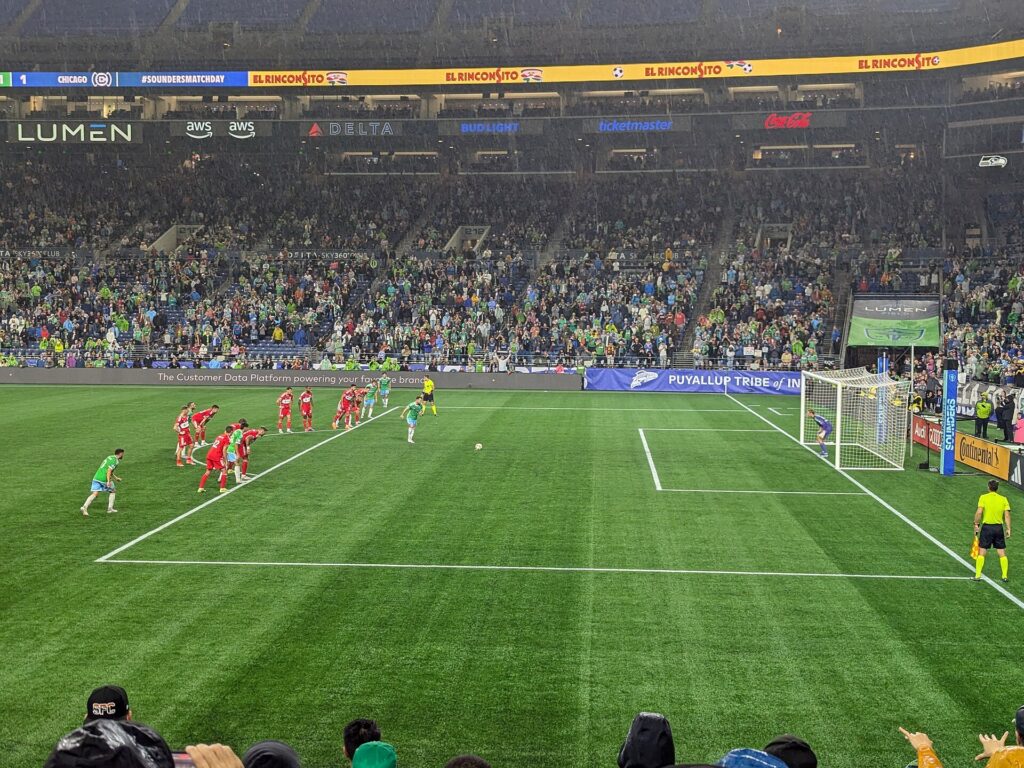
A penalty looks simple until you are the one standing over the ball. The distance is short, the target is huge, and yet misses stay in the memory for years because the moment strips everything down to a duel between one kicker and one goalkeeper. Good penalty taking is not really about courage alone. It is about repeatable mechanics, a clear decision before the run-up, and the discipline not to change your mind halfway through the strike.
The best takers make the whole action feel uneventful. Their body is balanced, their approach is under control, and the contact point is clean. What often separates a reliable taker from an erratic one is not how hard they hit the ball, but how little unnecessary movement they add under pressure. The calmer the action, the easier it is to reproduce.
Decide the kick before the run-up starts
The biggest mistake in penalty taking is indecision. A player begins the run-up wanting to place the ball low to the corner, sees the goalkeeper move, then tries to adjust in the final stride and drags the shot wide or lifts it too high. The miss usually looks technical, but the real problem started earlier: the decision was never fully made.
A sound penalty begins with a simple commitment. Pick the type of strike, pick the area of the goal, and accept that the kick must be executed cleanly rather than improvised in panic. Some top penalty takers are placement-first players and some are power-first players, but both succeed because the choice is made early and repeated often.
Placement beats raw power more often than people think
Many players assume a penalty must be blasted. That can work, but it raises the technical cost of even a small mistake. A shot hit with too much effort is harder to keep down, harder to steer, and more likely to lose accuracy if the standing foot lands a few inches off line.
Accurate placement is usually the safer foundation. A firm strike into the side netting, low and away from the goalkeeper, is harder to save than a wild shot struck at maximum force. The goal is not to produce the most dramatic finish. It is to make a save physically difficult by sending the ball early, cleanly and beyond reach.
The run-up should match the strike, not distract from it
There is no single correct run-up length. Some players prefer three or four steps, others want a slightly wider angle and a longer approach. What matters is that the run-up gives you control of your final stride and lets the hips open naturally towards the target.
A rushed approach often pulls the shot across goal, while a hesitant one can leave the body leaning back at contact. The cleanest run-up is one that lets the final two steps stay balanced. If the approach feels too quick to control your plant foot, it is too quick. If it feels so stop-start that you lose rhythm, it is too clever for its own good.
Your standing foot controls more than your kicking foot
Players naturally focus on the striking foot, but the standing foot does much of the directional work. Plant it too far from the ball and the strike becomes stretched and unstable. Plant it too close and the swing is cramped. Plant it too far behind and the ball may rise more than intended.
For most penalties, the standing foot should land beside the ball with the toes roughly pointed towards the intended line. That gives the hips a reference point and helps the body move through the kick instead of falling away from it. Many misses that look mysterious are just bad planting disguised as bad finishing.
Choose between reading the keeper and trusting your spot
There are two broad penalty approaches. One is to select a corner and trust the strike. The other is to delay the final commitment slightly and react to the goalkeeper. Both can work, but they demand different temperaments.
Picking your spot suits players with a repeatable action and a strong sense of contact. They are not trying to win a mind game; they are trying to execute a practiced strike. The goalkeeper can guess correctly and still fail if the placement is good enough.
Reading the goalkeeper suits players with softer feet and excellent composure. They watch for the early movement and pass the ball the other way. The danger is obvious: if you wait too long, the body freezes, the swing shortens and the shot loses quality. For most players below elite level, a committed strike to a chosen area is the more dependable method.
Low corners are still the percentage option
A perfect penalty into the top corner is almost unstoppable, but it is also a lower-margin shot. The contact has to be cleaner, the margin for error is smaller, and anxiety tends to lift the ball higher than intended. That is why so many missed penalties sail over the bar rather than dribble wide.
The low corners remain the percentage option because they ask the keeper to cover both distance and height quickly. A ball struck firmly a foot or two inside the post, without extra flourish, is the kind of penalty that keeps being scored in every era because it respects the basic geometry of the goal.
Practice should reproduce pressure, not just contact
Penalty practice often becomes a casual shooting drill, and that misses the point. Most players can score ten in a row when there is no consequence attached. The challenge is reproducing the same action when everyone is watching and the body wants to rush.
Useful practice means building a routine. Place the ball the same way. Step back the same distance. Breathe. See the target. Then take the same type of kick repeatedly until the movement stops feeling improvised. It also helps to finish sessions with penalties rather than begin with them, because tired legs and a bit of noise create something closer to a real match state.
What usually causes misses
Most misses come from one of four problems. The first is changing the decision too late. The second is leaning back and lifting the shot. The third is striking too hard for the chosen technique. The fourth is opening the body too early and telegraphing both the direction and the shape of the kick.
Notice how few of those problems are about bravery. Pressure matters, but it usually damages technique through tension and indecision. If the action is sound and the routine is known, the pressure has less room to interfere.
The goalkeeper is trying to read your body, not your thoughts
Goalkeepers look for clues in the hips, the angle of the approach and the final stride. That is why consistency matters so much. The more your run-up changes from one attempt to the next, the more you will feel expressive, but the less trustworthy the technique becomes under stress.
A dependable taker does not try to out-act the goalkeeper. They reduce the number of readable cues by staying balanced and striking through the ball with conviction. If the keeper guesses right, so be it. The kicker still wants the shot to be good enough to beat a correct guess.
You do not need a signature hop to be a good taker
Modern penalties sometimes get reduced to style. The staggered run-up, the pause, the little hop and the no-look finish draw attention because they are visible. But those are optional features, not fundamentals. A player without any trademark movement can still be an excellent penalty taker if the contact, balance and decision-making are strong.
In fact, many players copy the surface habits of elite takers without copying the hours of repetition behind them. That is why exaggerated routines often break down first in amateur football. Simpler mechanics usually scale better across different pressure levels and playing surfaces.
Different players need different strengths from the same basic method
A powerful striker may benefit from shortening the backswing slightly and focusing on keeping the ball down. A smaller or less explosive player may lean more on placement and disguise. A left-footed taker opening the body to the goalkeeper right side will create a different visual cue from a right-footer doing the same thing. The common principle is not copying one famous penalty style. It is building a version that fits your own balance and contact.
What should not change is the logic underneath: commit early, plant cleanly, strike through the ball, and accept that a well-executed penalty does not need theatrics to succeed.
Why penalty technique matters for reading football as well
Understanding penalties is useful beyond taking them. It also helps you read players and matches. Some forwards are visibly clean, repeatable strikers of the ball under pressure; others look brilliant in open play but awkward from the spot. Some goalkeepers wait deep and react, while others try to win the duel early by movement and delay. These details matter when you assess shootout strength, individual composure and the likely outcome of tight knockout games.
That is part of what makes penalty taking such a revealing skill. It compresses technique, decision-making and nerve into one moment. The player who masters it does not eliminate pressure. They simply reduce the number of things that pressure can destroy.
Wrapping up
A good penalty is not magic and it is not luck. It is a stable routine built on early decision-making, sound planting, balanced movement and clean contact. The best takers make the kick look ordinary because they have removed the panic from it. That is the real aim. Not to look fearless, but to have a method that still works when the nerves arrive.
📚 From the Blog
Image credit: SounderBruce / Wikimedia Commons (CC BY-SA 4.0)