
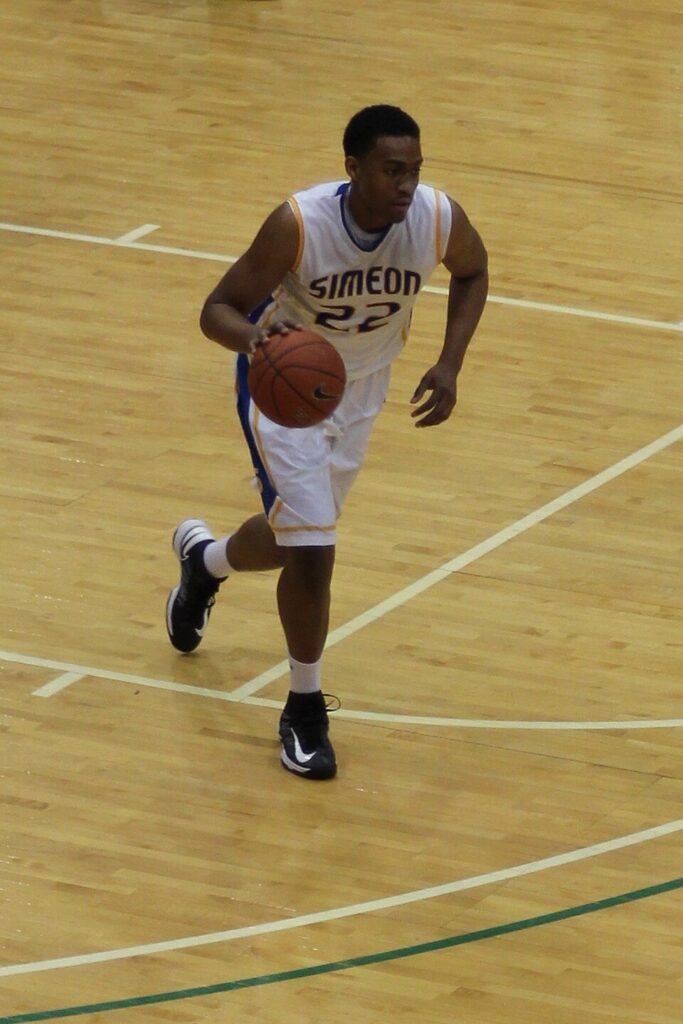
What Does a Pick and Roll Mean in Basketball?
A pick and roll is one of the most common actions in basketball and one of the easiest to recognize once you know what to look for. One player, usually without the ball, sets a screen for the ball-handler. The goal is to block or slow the defender who is guarding the dribbler. After setting the screen, the screener then moves toward space, often by rolling to the basket. That is the basic pattern: screen first, move second. The defense has to decide quickly whether to switch, chase, trap, or help, and that one moment of indecision is why the action has survived every tactical era.
People sometimes talk about the pick and roll as if it were one rigid play, but it is really a family of actions. The same two-player idea can be run at the top of the floor, on the wing, in transition, with a big man diving hard, or with a forward slipping out to the three-point line. The structure is simple enough for almost every level of basketball, yet flexible enough for the best teams in the world to keep building new wrinkles around it.
Why It Works So Reliably
The action attacks a basic defensive problem. Guards do not want to get stuck behind a screen. Big men do not want to abandon the paint or get dragged into space against quick ball-handlers. Help defenders do not want to leave shooters in the corners. The pick and roll pressures all three concerns at once. If the defender on the ball dies on the screen, the dribbler turns the corner. If the screener defender steps up too high, the roll lane opens. If the weak side collapses to stop the roll, shooters become available.
In other words, the pick and roll forces the defense to choose which problem it dislikes most. That is why it appears so often late in games. Coaches trust it because it creates reads rather than requiring one perfect choreographed outcome. The offense does not always know which option will open, but it knows the action can produce one.
The Screen Is More Than Standing in the Way
A good screen is not just a stationary body. The angle matters. The timing matters. The screener has to arrive early enough to get set and place the body where the defender actually wants to go. A lazy or mistimed screen lets the defender slide under or around it without much disruption. A well-placed one changes the entire possession.
For the ball-handler, patience is just as important. Young players often use the screen too early or too far away from the screener shoulder. That wastes the advantage. The dribbler should come close enough to force the defender into contact or into a difficult detour. If there is too much space between ball-handler and screener, the defender escapes and the play loses its purpose.
What the “Roll” Part Actually Means
After the screen, the screener usually opens to the basket and moves into open space. That movement is the roll. A classic rolling big man turns, dives into the lane, and presents a target for a pass near the rim. If the defense helps on the ball, the roll man can catch and finish. If the low defender rotates across, there may be a pass available to a teammate in the corner.
Not every screen becomes a full dive to the basket. Sometimes the screener “pops” instead, backing out to the perimeter for a jump shot. Sometimes the screener slips the pick before full contact if the defense looks ready to trap. These are variations on the same theme. The screen creates the question; the roll, pop, or slip provides the answer that punishes the defense choice.
The Ball-Handler Job Is to Read, Not Just to Dribble
People often praise great pick and roll guards for ball control, but the higher skill is decision-making. The ball-handler has to read the defender on the screen, the big man coverage, the tag from the weak side, and the space left behind by rotating help. That is a lot to process in a few seconds.
Sometimes the right answer is to attack the rim immediately. Sometimes it is to stop for a pull-up jumper if the defender goes under the screen. Sometimes it is to hit the roll man in stride. Sometimes it is a simple pocket pass dropped into a tight window before the help collapses. Great pick and roll players make the action look easy because they recognize the coverage early and get to the right solution before the defense fully recovers.
Defenses Have Different Ways to Fight It
Once you understand the offense side, the next step is learning how defenses respond. A switch means the two defenders exchange assignments, trying to prevent an open driving lane but risking a mismatch. A drop coverage means the big defender stays deeper, protecting the paint and inviting the ball-handler to settle for a mid-range jumper or floater. A hedge or show brings the screener defender up briefly to slow the dribbler before recovering. A trap sends both defenders hard at the ball, forcing it out of the star guard hands.
Each answer solves one problem and creates another. Switching can leave a smaller defender wrestling with the roll man. Drop coverage can give skilled pull-up shooters too much daylight. Trapping can expose the short roll, where a smart big catches the ball in space and plays four-on-three. That is why pick and roll basketball becomes a chess match over a series of possessions. The action stays the same, but the details keep changing.
Personnel Changes Everything
A pick and roll with a quick guard and a vertical lob threat feels different from one involving a powerful wing and a shooting big. If the screener can pop and shoot, the defense cannot sit too deep. If the guard cannot punish a defender going under the screen, the coverage becomes easier. If the roller has soft hands and good passing vision, the short roll becomes dangerous rather than just a bailout option.
This is why teams chase particular combinations of talent. The action itself is not the secret. The pressure comes from who is running it and what range of outcomes they threaten. A screen from an average player and a screen from a dominant rim runner may look similar at first glance, but the defense feels them differently because the consequences are different.
Why the Corners Matter Even When They Do Not Touch the Ball
A lot of casual viewers focus only on the two players directly involved. In reality, the spacing around them is what makes the action breathe. Shooters in the corners hold help defenders in place. If those weak-side defenders cannot leave confidently, the roll man gets more room and the ball-handler sees clearer passing lanes. Poor spacing ruins that geometry. If the corner is crowded or filled by a non-shooter defenders ignore, the help comes early and the action clogs up.
That is why watching a good pick and roll possession means watching the whole floor. The pass may never go to the weak side, yet those players are still shaping the play by how much attention they demand.
How to Recognize a Good One in Real Time
The easiest clue is how much pressure the screen puts on the on-ball defender. If the defender is clipped cleanly and the ball-handler gets downhill, the action is already alive. Next, watch the screener path. Does he roll hard and present a target, or does he drift without purpose? Then watch the weak-side help. If a corner defender stunts toward the lane, there may be a kick-out pass coming. If nobody helps, the roller may have a clear runway to the rim.
Once you start seeing those reactions, the game opens up. The pick and roll stops being background noise and becomes one of the clearest windows into team quality. You begin to notice which guards manipulate coverages, which screeners create real contact, and which defenses communicate well enough to survive repeated pressure.
The Meaning in Plain Terms
So what does a pick and roll mean in basketball? It means one player sets a screen for the ball-handler and then moves into space, usually toward the basket, to create an advantage. The phrase sounds technical only until you watch it a few times with the right lens. After that, it becomes one of the simplest and most revealing actions in the sport.
It matters because it forces the defense into uncomfortable choices and gives the offense several possible answers from the same starting point. That mix of clarity and flexibility is why coaches trust it and why fans who understand it suddenly see much more happening in every possession.
📚 From the Blog
Image credit: TonyTheTiger / Wikimedia Commons (CC BY-SA 3.0)