
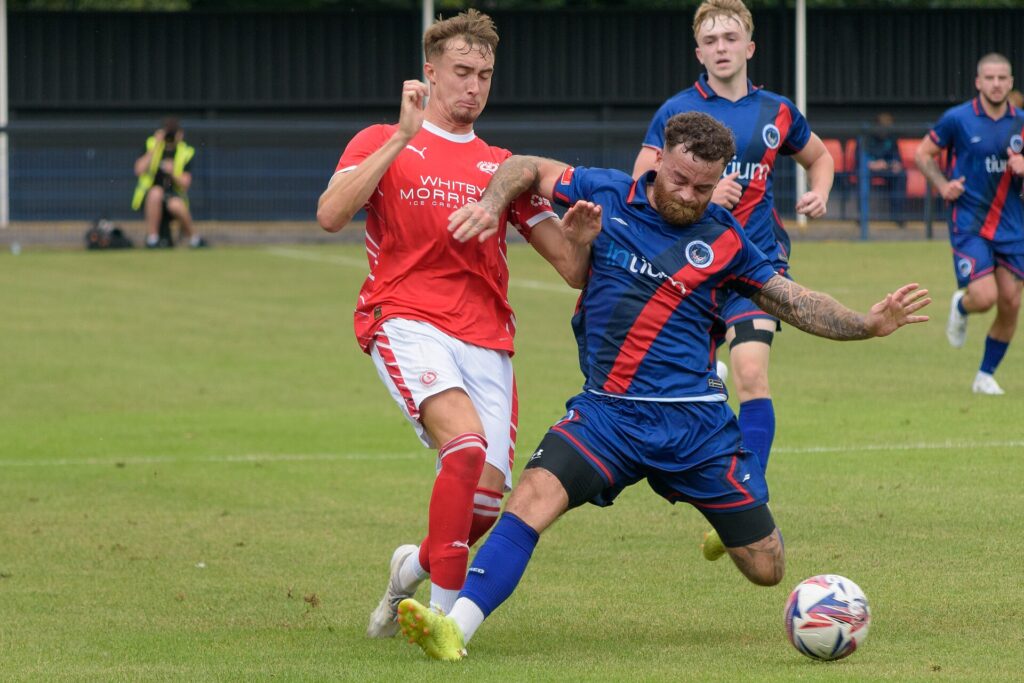
Full-back used to be described as a defensive position with occasional attacking duties. Modern football has made that description too simple. A full-back now has to survive one-against-one defending in wide space, recognise when to press and when to delay, protect the channel inside them, support the winger ahead of them, and still have enough legs left to recover when the ball is lost. It is one of the most exposed jobs on the pitch because your mistakes happen near touchlines with large spaces behind you and very little cover if the duel goes wrong.
That is why good full-back defending is rarely just about tackling. The best defenders in the role are readers first. They manage distance, angle, timing and help. They know when the goal is to win the ball, when the goal is simply to stop the winger turning the corner, and when the clever decision is to hold the attacker up long enough for the rest of the back line to reset.
Start with your body shape, not the challenge
The first technical question for a full-back is how to stand. Square up too early and a quick winger can beat you on either side. Open too much towards the touchline and you may invite the dribble inside, which is often the more dangerous route because it leads straight into central shooting or passing lanes.
Most of the time the aim is a half-turned stance that lets you move in either direction while subtly showing the attacker the less damaging option. Against an inverted winger who wants to cut inside and shoot, that may mean shading the line into midfield and being more willing to show the outside. Against a touchline runner looking to win the byline, the priorities reverse.
Distance control is the heart of wide defending
Young full-backs often make the same mistake in opposite ways. Some dive in from too far away and get skipped past because the attacker still has time to touch the ball around them. Others drop off endlessly and allow easy crosses or combinations because they never get close enough to affect the play.
Good distance control means arriving close enough to influence the attacker but not so close that one feint takes you out of the duel. The ideal gap changes with the quality of the opponent, the speed of the pitch and whether you have cover inside. What never changes is the principle: control the space before you try to win the ball in it.
Know whether your first job is to stop the inside lane or the outside lane
There is no universal answer to which direction a full-back should force an attacker. It depends on the attacker profile, your support, and where danger lives in that phase of play. If the winger strongest action is cutting inside onto their stronger foot, you may want to work hard to deny that route and send them down the line. If there is no centre-back cover near the channel, the byline may be the greater danger and you may need to protect it first.
The important point is that this decision should feel deliberate. Full-backs who defend well are not just reacting. They have already read what the attacker wants and where the help is. Their stance reflects a plan.
Delay is often a better outcome than the tackle
Fans love a crunching challenge because it looks decisive, but many of the best defensive actions by full-backs are quieter. The defender slows the winger, blocks the direct route, and forces the ball backwards. In that moment, the back line regains shape, the midfielder recovers inside, and the attack loses its edge.
This is especially true in transition. When the ball is switched quickly and the full-back is isolated, the immediate goal is often not to steal possession. It is to keep the situation alive long enough for support to arrive. A rushed tackle in open space can turn a manageable recovery into a free run at goal.
The touchline is a defender’s friend if you use it properly
Wide defending gives you one natural ally that central defenders do not have: the line. If you can angle the attacker towards the touchline, you shrink their options. The field effectively acts as an extra defender, reducing the number of escape routes and making the next touch easier to anticipate.
But this only works if your feet stay live. Some defenders overuse the idea and lunge once they think they have shown the attacker outside. Fast wingers wait for exactly that moment. The line helps, but it does not replace patience.
Defending crosses begins before the delivery
People often judge full-backs on whether they blocked the cross, but the real work starts earlier. Did the defender get close enough to make the winger rush the delivery? Did they push the attacker onto a weaker foot? Did they force the cross from a deeper, less dangerous zone rather than allowing a cut-back from near the byline?
Not all crosses are equally threatening. A floated ball from thirty yards is usually easier to defend than a low pass pulled back from near the goal line. Good full-backs understand this hierarchy. If they cannot stop the cross altogether, they try to worsen the angle and the quality of the final ball.
Scanning inside is what stops the hidden danger
One trap of defending wide is becoming too focused on the ball and forgetting the runner arriving inside you. Full-backs constantly have to split attention between the winger in front, the overlapping or underlapping support runner, and the midfielder or forward attacking the half-space behind them.
That is why scanning matters so much. A quick look inside before the ball arrives can tell you whether the real danger is the player facing you or the runner trying to appear on your blind side. Full-backs who scan well seem calmer because fewer movements surprise them.
Recovery runs need a plan, not just speed
When a full-back is beaten or caught high up the pitch, raw pace helps, but the angle of the recovery run matters just as much. Sprinting straight back towards your own goal may look urgent while doing very little to affect the ball carrier. Often the better route is curved, one that cuts off the inside pass or gets you goal side of the runner first.
In those moments, the full-back has to think while exhausted. Is the attacker still a crossing threat? Is the central lane the bigger issue? Can the centre-back engage the ball if you recover to the runner? Smart recovery is not glamorous, but it saves chances every week.
The modern full-back also has to defend after attacking
Because full-backs now join attacks more often, many of their hardest defensive moments come immediately after possession is lost. If you were high and wide when the turnover happened, the space behind you is already available. That makes your rest defence awareness critical even while your team has the ball.
Top full-backs think ahead. Before the cross or combination is played, they already know what the risk looks like if it breaks down. That awareness shapes how aggressively they commit and how quickly they react once the ball changes hands.
Different wingers require different defensive language
Some attackers want repeated touches and one-against-one rhythm. Others are explosive runners who need only a yard to attack the outside shoulder. Some play like creators, constantly searching for the inside pass rather than the dribble. A full-back who defends every winger in the same way is eventually going to be punished.
The best approach is to identify the opponent’s preferred action early. If the winger always wants to roll the ball inside onto a shooting foot, defend the setup before the shot. If they thrive on foot races, do not hand them a sprinting contest from a poor starting position. Tailoring the duel is part of the craft.
Communication with the winger and centre-back matters
Full-backs live at the meeting point between the touchline and the defensive line, so they need constant information from both sides. The winger ahead can help screen passing lanes or track the opposing full-back. The centre-back inside can tell you when to press, when cover exists and when a runner has gone beyond your shoulder.
Silent full-backs have to solve everything alone. Communicative ones turn the flank into a small unit. That matters because wide defending is rarely one duel in isolation. It is a chain of linked decisions between two or three teammates.
Wrapping up
Defending as a full-back is about managing risk in a position where the danger changes every few seconds. Technique matters, but so do reading, scanning, body shape and patience. The best full-backs are difficult to beat not because they tackle constantly, but because they make the attacker solve the wrong problem over and over again. They control the lane, delay the moment of danger, and choose their tackle only when the odds have shifted in their favour.
📚 From the Blog

Image credit: Dominic Nelson / Wikimedia Commons (CC BY-SA 4.0)